Settler Colonialism Across Contexts: A Comparative Reflection
Followed by Arabic translation متبوعًا بترجمة عربية
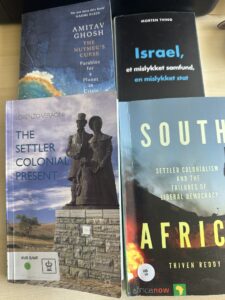
This comment engages four key works: The Settler Colonial Present by Lorenzo Veracini (2015); The Nutmeg’s Curse by Amitav Ghosh(2021); Israel, et mislykket samfund -Israel, a Failed Society (2023) by Morten Thing; and South Africa, Settler Colonialism & the Failures of Liberal Democracy by Thiven Reddy (2015). Together, these works trace recurring patterns of settler colonialism across regions including South Africa, Palestine, the Banda Islands, and the Americas.
Veracini conceptualizes settler colonialism as an enduring structure marked by the elimination of Indigenous lifeworlds. He distinguishes settler colonialism from other forms of colonialism through an analogy with biological processes—comparing them to bacteria and viruses—which operate differently, though both are intertwined in exploiting Indigenous bodies, while also seeking their displacement (p. 26). This structure involves environmental transformation, such as large-scale deforestation, and symbolic domination through practices like renaming. As Ghosh argues, renaming functions to erase prior meanings embedded in colonized landscapes. In Palestine, for example, more than ten thousand Arabic place names—villages, valleys, mountains, fields, harbours, cities, and towns—were replaced by Hebrew names, following colonization. Even British museum nowadays remove the world Palestine from its exhibited items as an inaccurate term to be used as the museums head claimed-contrary to all ancients archeological proof that the word Palestine was used for a millennia by Egyptians, Persians, Assyrians, Greeks & Romans since the 12th century BC, & persisted until nowadays. Before that it was named Retenu.
More than 80 forests and parks have also been renamed, often after international donors, contributing to the erasure of Indigenous toponymy. Three examples illustrate this process: the South African Forest established on the lands of Lubya (later contested and partially reversed following protests); Denmark Forest on the site of Allar; and Canada Park on the lands of Emwas – Emwas was one of three villages—along with Yalo and Beit Nuba—that were depopulated and destroyed during the Six-Day War in June 1967.
Acedemian & Literary works also register these dynamics. The War of the Worlds by H. G. Wells reflects exterminatory logics shaped by colonial violence, including the destruction of Indigenous populations in Tasmania. Ghosh further highlights how ecological destruction was integral to these processes: between 1865 and 1883, millions of buffalo were slaughtered in North America, linking the eradication of animal life to the dispossession of Indigenous peoples p. 68. As Nick Estes notes, the destruction of buffalo and Indigenous societies was structurally interconnected.
Similarly, Heart of Darkness by Joseph Conrad exposes the violence of colonial rule in the Congo Free State, encapsulated in Kurtz’s famous expressions: “The horror! The horror!” and “Exterminate all the brutes.” These phrases continue to resonate in contemporary dehumanizing discourses in nowadays Western World.
Morten Thing contributes to this field through a critical analysis of the colonization of Palestine from its inception, situating it within the broader history of the “Jewish Question.” that started in Europe. His work examines the ongoing displacement of Palestinians since 1948 and can be read alongside two relevant monographs: Three Worlds: Memoirs of an Arab-Jew by Avi Shlaim and The Hundred Years’ War on Palestine by Rashid Khalidi, which offer complementary perspectives. Morten’s book is extremely rich, precise, and well in-depth documented analysis of how Palestinians were uprooted from their homeland.
Across cases—from the Americas, Australia, and New Zealand to Indonesia, South Africa, and Palestine—settler colonial projects display shared logics despite differing historical justifications. Whether driven by the spice trade in the early modern period or by oil and gas extraction in the modern era, these projects reveal enduring structures of dispossession and control. Over the past five centuries—since Christopher Columbus reached the Americas in 1492 and Vasco da Gama reached India in 1498—variations of Colonialism have repeatedly reproduced similar patterns, reshaping landscapes and societies in the pursuit of power, control, and profit, often justified through discourses of religion, race, and civilization.
Across cases—from the Americas, Australia and New Zealand to Indonesia, South Africa, and Palestine—settler colonial projects display shared logics despite differing historical justifications. Whether driven by the spice trade in the early modern period or by oil and gas extraction in the modern era, these projects reveal enduring structures of dispossession and control. The last five hundred centuries, since Christopher Columbus reached America in 1492 and Vasco Da Gama reached India in 1498, repeat the same paradigm of Colonialism with all its variations & forms, committing war crimes, rooting up the original people of their colonies, massacring millions through diseases and military attacks, enslaving people to work freely in colonial plantations, destroying the last remnants of the wealthy planet we have for the benefit of the very few who look only for Power, Dominance, Control and Profit, covered always with a mantle of religion, race, nation, gender & colour.
الاستعمار الاستيطاني عبر السياقات: تأمل مقارن
يتناول هذا التعليق أربعة أعمال رئيسية: الحاضر الاستيطاني الاستعماري للورنزو فيراكيني (2015)، ولعنة جوزة الطيب لأميتاف غوش (2021)، وإسرائيل، مجتمع فاشل (2023) لمورتن ثينغ، وجنوب أفريقيا، الاستعمار الاستيطاني وإخفاقات الديمقراطية الليبرالية لثيفين ريدي (2015). مجتمعةً، تتتبع هذه الأعمال أنماطًا متكررة من الاستعمار الاستيطاني عبر مناطق تشمل جنوب أفريقيا وفلسطين وجزر باندا والأمريكيتين.
يُصوّر فيراكيني الاستعمار الاستيطاني بوصفه بنيةً مستمرة تتميز بالقضاء على عوالم حياة السكان الأصليين. ويميّزه عن غيره من أشكال الاستعمار من خلال تشبيه بعمليات بيولوجية—مقارنًا إياهما بالبكتيريا والفيروسات—التي تعمل بطرق مختلفة، رغم تداخلهما في استغلال أجساد السكان الأصليين، إلى جانب السعي لإزاحتهم (ص. 26). وتشمل هذه البنية تحولات بيئية، مثل إزالة الغابات على نطاق واسع، وهيمنة رمزية عبر ممارسات مثل إعادة التسمية. وكما يجادل غوش، فإن إعادة التسمية تعمل على محو المعاني السابقة المتجذرة في المناظر الطبيعية المستعمَرة. ففي فلسطين، على سبيل المثال، تم استبدال أكثر من عشرة آلاف اسم مكان عربي—لقرى ووديان وجبال وحقول وموانئ ومدن وبلدات—بأسماء عبرية عقب الاستعمار. وحتى المتاحف البريطانية في الوقت الحاضر تزيل كلمة “فلسطين” من معروضاتها باعتبارها مصطلحًا غير دقيق، كما يدّعي بعض القائمين عليها، رغم الأدلة الأثرية القديمة التي تثبت أن اسم فلسطين استُخدم لآلاف السنين من قبل المصريين والفرس والآشوريين واليونانيين والرومان منذ القرن الثاني عشر قبل الميلاد، واستمر استخدامه حتى اليوم. وقبل ذلك كانت تُعرف باسم “رتنو”.
كما أُعيدت تسمية أكثر من 80 غابة ومنتزهًا، غالبًا بأسماء متبرعين دوليين، مما ساهم في طمس الأسماء الجغرافية الأصلية للسكان الأصليين. وتوضح ثلاثة أمثلة هذه العملية: الغابة الجنوب أفريقية التي أُنشئت على أراضي لوبيا (والتي جرى الطعن فيها لاحقًا وعكسها جزئيًا بعد احتجاجات)، وغابة الدنمارك في موقع علّار، ومنتزه كندا على أراضي عمواس—وكانت عمواس واحدة من ثلاث قرى، إلى جانب يالو وبيت نوبا، التي أُخليت من سكانها ودُمّرت خلال حرب الأيام الستة في يونيو/حزيران 1967.
كما تعكس الأعمال الأكاديمية والأدبية هذه الديناميكيات. تجسد رواية حرب العوالم لـ هـ. ج. ويلز منطق الإبادة الذي تشكّل بفعل العنف الاستعماري، بما في ذلك تدمير السكان الأصليين في تسمانيا. ويبرز غوش كذلك كيف كان التدمير البيئي جزءًا لا يتجزأ من هذه العمليات: فبين عامي 1865 و1883، ذُبح الملايين من حيوانات البيسون في أمريكا الشمالية، مما ربط بين القضاء على الحياة الحيوانية ونزع ملكية الشعوب الأصلية (ص. 68). وكما يشير نيك إستس، فإن تدمير البيسون والمجتمعات الأصلية كان مترابطًا بنيويًا.
وبالمثل، تكشف رواية قلب الظلام لجوزيف كونراد عن عنف الحكم الاستعماري في دولة الكونغو الحرة، ويتجلى ذلك في العبارات الشهيرة لكورتز: «يا للرعب! يا للرعب!» و«أبيدوا جميع الهمج». ولا تزال هذه العبارات تتردد في الخطابات المعاصرة التي تنزع الإنسانية في العالم الغربي اليوم.
يساهم مورتن ثينغ في هذا المجال من خلال تحليل نقدي لاستعمار فلسطين منذ نشأته، واضعًا إياه ضمن السياق الأوسع لـ«المسألة اليهودية» التي بدأت في أوروبا. ويفحص عمله التهجير المستمر للفلسطينيين منذ عام 1948، ويمكن قراءته إلى جانب عملين مهمين: ثلاثة عوالم: مذكرات عربي-يهودي لآفي شلايم وحرب المئة عام على فلسطين لرشيد الخالدي، اللذين يقدمان رؤى مكملة. ويُعد كتابه غنيًا للغاية ودقيقًا وموثقًا بعمق في تحليله لكيفية اقتلاع الفلسطينيين من وطنهم.
وعبر الحالات المختلفة—من الأمريكيتين وأستراليا ونيوزيلندا إلى إندونيسيا وجنوب أفريقيا وفلسطين—تُظهر مشاريع الاستعمار الاستيطاني منطقًا مشتركًا رغم اختلاف المبررات التاريخية. وسواء كانت مدفوعة بتجارة التوابل في بدايات العصر الحديث أو باستخراج النفط والغاز في العصر الحديث، فإن هذه المشاريع تكشف عن هياكل مستمرة من نزع الملكية والسيطرة. وعلى مدى القرون الخمسة الماضية—منذ وصول كريستوفر كولومبوس إلى الأمريكيتين عام 1492 ووصول فاسكو دا غاما إلى الهند عام 1498—أعادت أشكال الاستعمار المختلفة إنتاج أنماط متشابهة، معيدة تشكيل المناظر الطبيعية والمجتمعات في سعيها وراء القوة والسيطرة والربح، وغالبًا ما جرى تبرير ذلك عبر خطابات الدين والعرق والحضارة.

